Resilience, Health & Intelligent Air
Building tight is a necessity for energy efficiency, but without intelligent ventilation an airtight building can quickly become a vessel for damp, mould and poor indoor air quality.
High performance fabric needs intelligent ventilation.
Energy efficiency and occupant health must work together, not compete.
Modern design must combine old wisdom with smart precision.
For centuries, our approach to shelter has evolved from the thermal mass of stone and radiant heat of fires, to the convenience of the gas era, and now to the urgent requirement for net-zero performance.
Today, we are learning that energy-efficient design must not simply seal the building. It must preserve comfort, manage moisture and protect the people living inside.
Traditional Thermal Mass
Historic buildings relied on mass, shelter and radiant warmth to stabilise comfort.
The Gas Era
Central heating made comfort convenient, but often disconnected buildings from performance.
Net-Zero Performance
Modern buildings must be airtight, efficient and actively managed for health.
A building’s fabric is fundamentally about occupant health.
With the introduction of Awaab’s Law, the mandate to address damp and mould in housing is now a legal and moral necessity.
Preventing the root causes of damp, mould and poor air quality is the only responsible way to ensure buildings are healthy places to live.
Damp Prevention
Managing moisture before it becomes a building defect or a health risk.
Mould Risk Reduction
Balancing airtightness with controlled air exchange to reduce mould conditions.
Healthy Occupancy
Designing buildings around the wellbeing of the people who occupy them.
The hidden cost of traditional ventilation.
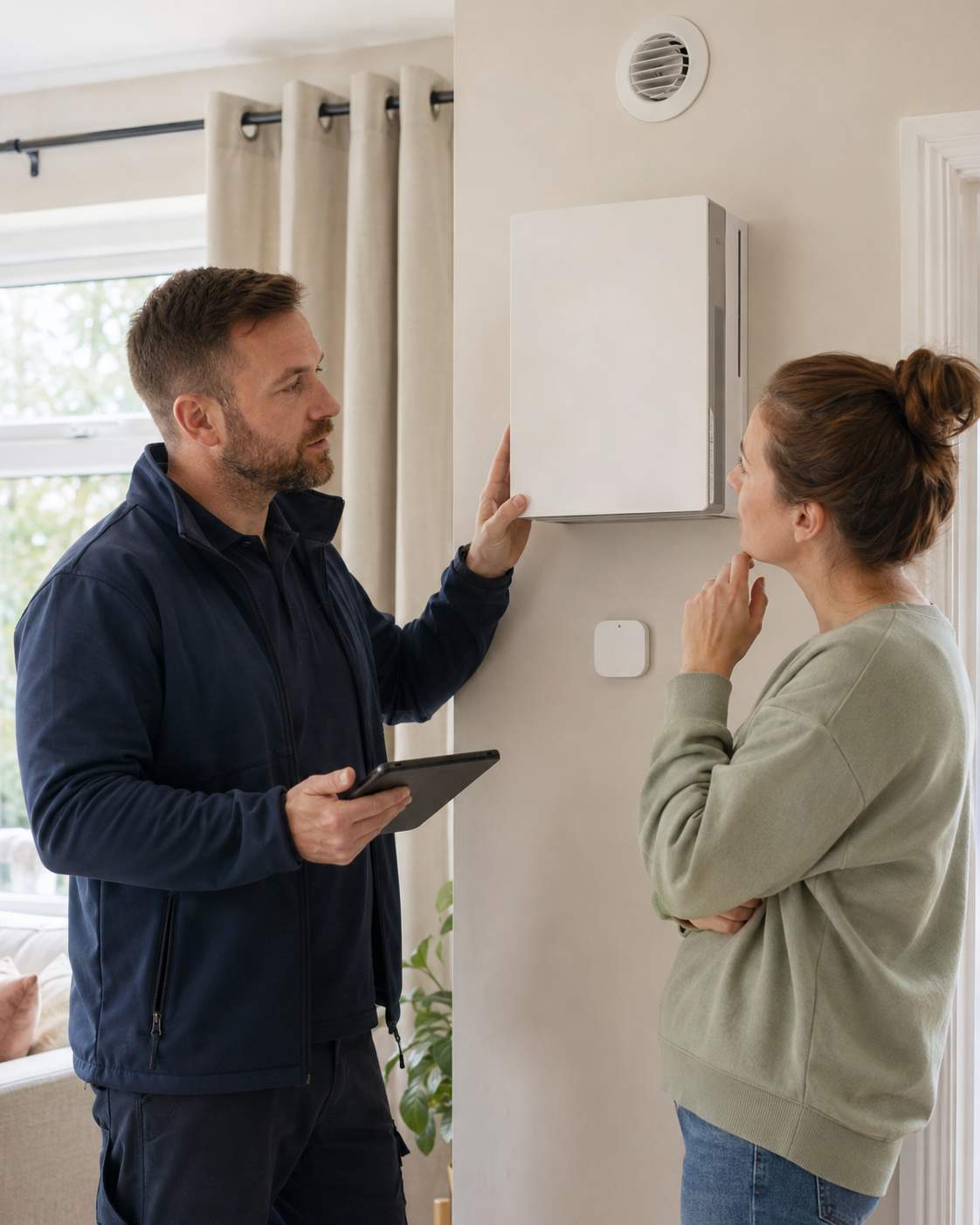
Traditional solutions for airtight buildings are often flawed, either wasting generated heat or demanding bulky systems that are difficult to retrofit.
Opening windows wastes controlled energy.
Opening windows to mitigate condensation can lose generated heat and introduce outdoor pollutants, allergens and insects.
Bulky plant is difficult to retrofit.
Large centralised systems can be expensive, difficult to site and frequently unsuitable for the UK’s diverse existing housing stock.
We do not just seal buildings. We make them breathe dynamically.
Nexus Green Tech advocates for a fabric-first mindset, balanced by decentralised, intelligent systems that protect energy performance and occupant wellbeing.
Decentralised Efficiency
Removing the need for massive plant rooms and reducing the risk of catastrophic failure.
Granular Control
Managing rooms precisely so comfort is maintained only where and when it is needed.
Data-Driven Interventions
Measuring actual performance before implementation to avoid over-engineering.

Controls and AI can harmonise historic wisdom with modern automation.
Our research and development projects in controls and AI allow us to integrate core values with solid data monitoring, bringing past usage trends in line with future building management.
Monitor real building behaviour
Understand usage and occupancy trends
Automate ventilation with human outcomes in mind
Healthy buildings need resilient fabric and dynamic ventilation.
By combining airtightness and high-performance insulation with intelligent decentralised ventilation, Nexus delivers environments that are energy-efficient, resilient and healthy.